What Size Skip Do I Need? Ultimate UK Guide 2026
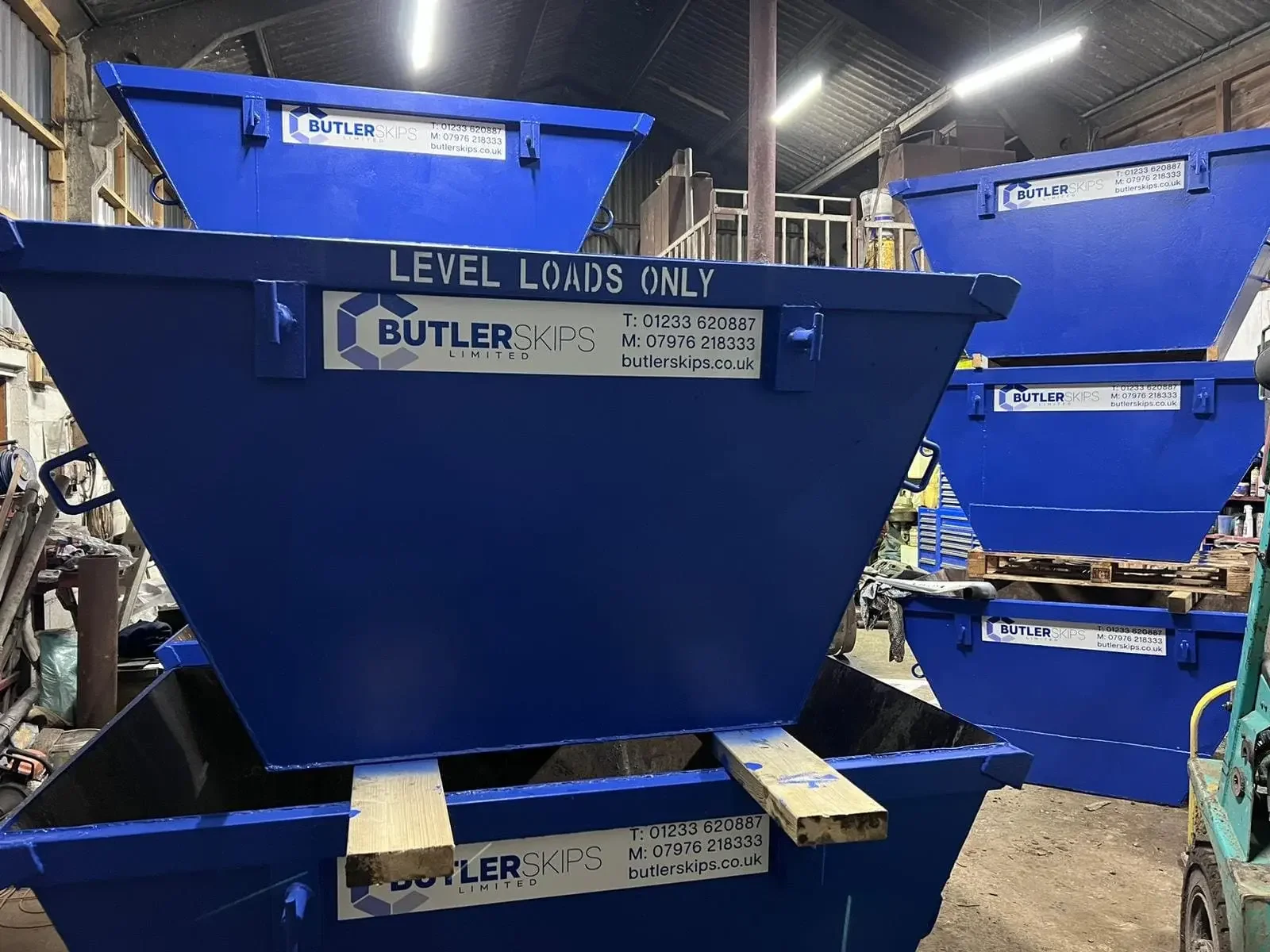
Standing in your driveway trying to picture whether your rubbish will fit in a skip is one of the most common - and most guessed-at - parts of planning a clear-out. Get it wrong, and you're either paying for empty space or ordering a second skip halfway through the job. This guide walks through exactly what size skip you need, what actually fits in a mini skip, and what UK law says you can (and can't) put in one, so you can order with confidence the first time.
Quick answer for most households: if you're clearing a single room, doing a garden tidy-up, or handling DIY offcuts, a 2-yard mini skip covers it. Full house clearances and major renovations usually need more, and we'll show you exactly how to tell which camp you're in.
Ready to book? Get a 2-yard mini skip delivered to your driveway →
Contents
How skip sizes are actually measured
Skip sizes in the UK are measured in cubic yards - the volume of waste the skip can hold, not its weight. One cubic yard is roughly the size of a large tumble dryer. So a "2-yard skip" holds about two of those, front to back.
UK skip sizes at a glance
Here's how the common sizes compare, so you know where a mini skip sits in the wider picture:
| Size | Typical use | Bin bag equivalent |
|---|---|---|
| 2-yard (mini)What we offer | Small DIY, garden waste, single-room clearances | 20–30 bags |
| 4-yard | Bathroom/kitchen refits, medium garden jobs | 40–50 bags |
| 6–8-yard (builder's) | Larger renovations, small house clearances | 60–85 bags |
| 12-yard+ / RoRo | Full house clearances, construction sites | 100+ bags |
Butler Skips specialises exclusively in the 2-yard mini skip - it's not a partial range, it's the size we've chosen to do properly. If your job genuinely needs something bigger, we'll say so honestly (more on that below).
But size isn't only about how much waste fits. It's also about where the skip can physically go. Our compact skips can reach properties and yards that a full-size skip lorry simply can't: narrow lanes, tight side access, gated driveways. If a builder's van can get to your site, there's a good chance we can too. We regularly win jobs precisely because we're the only skip company that can physically reach the property.
What actually fits in a 2-yard mini skip
In real terms, a 2-yard skip measures roughly 6ft long, 4ft wide and 3ft high (about the footprint of a large estate car boot) and holds the equivalent of around six or seven standard wheelie bins' worth of waste. That typically covers:
A full garden clear-out (branches, turf, hedge trimmings, old fencing)
Bathroom rip-out waste (tiles, a small suite, offcuts)
Single-room decluttering, including one or two large items of furniture
Builder's rubble and offcuts from a small DIY project
Because it's compact enough to sit on a driveway rather than the road, most 2-yard skips also avoid the need for a council permit entirely - one of the quieter reasons mini skips work out cheaper than they first appear.
Is a mini skip enough for your job?
Ask yourself these three questions:
Is this one room or area, not the whole property? Mini skips excel at contained jobs.
Could I estimate the waste in wheelie bins rather than skip-loads? If you're picturing 6-7 bins' worth, you're in mini skip territory.
Do you have driveway or off-road space? If not, that changes the equation regardless of size.
If you answered yes to all three, a mini skip is very likely your most cost-effective option — and because delivery is fast, ordering a second one if you slightly underestimate is usually simpler than it sounds.
If you're looking at a full house clearance, a major multi-room renovation, or a one-off job with a genuinely large volume, a single mini skip probably won't be enough, and this is exactly where it's worth being honest rather than trying to make the numbers work. Our sister company, Cage Waste Removal, handles exactly these larger, one-visit clearance jobs across Kent with van-based collection, which can be a better fit than ordering several mini skips back to back. For ongoing or multi-stage projects, though, booking a fresh mini skip as each stage finishes often works out both cheaper and faster than waiting for a single large skip to be filled.
What you legally can't put in any skip
This applies regardless of skip size, and it's worth knowing before you load anything:
Hazardous waste: paint (wet), chemicals, solvents, asbestos
Electrical items (WEEE): fridges, TVs, computers, and anything with a plug
Tyres, gas bottles, and batteries
Butler Skips can dispose of Tyres at an extra cost.
Upholstered furniture: as of January 2023, sofas, armchairs and footstools are prohibited from general skips UK-wide under Persistent Organic Pollutants (POPs) regulations, and must be incinerated rather than landfilled. This one catches people out constantly, because it's a legal change, not a size limitation - even the biggest skip in the country can't legally take an old sofa now.
Butler Skips can dispose of upholstery at an extra cost.
Plasterboard in large quantities: it needs separating, as it releases hydrogen sulphide gas if it decomposes alongside general waste
Butler Skips can dispose of plasterboard, if separated, at an extra cost.
For the full breakdown of what's fine to include, see our complete guide to what can go in a skip.
Do you need a permit?
If your skip sits entirely on private property - a driveway, garden, or yard - you generally don't need a permit. The moment any part of it touches a public road or pavement, you'll need permission from your local council first. This is one of the practical advantages of a mini skip: its compact footprint makes fitting it on private land far more realistic than it is for larger sizes.
Common mistakes to avoid
Guessing instead of measuring. Walk the space and estimate in wheelie-bin equivalents rather than eyeballing it - it's a far more reliable yardstick than it sounds.
Not checking for prohibited items before you book. Finding out a sofa or fridge can't go in after you've loaded it means an extra collection and extra cost.
Overfilling. Waste must sit below the skip's rim for safe, legal transport - overfilled skips can be refused collection entirely.
Not checking access. Confirm the delivery vehicle can actually reach your driveway before booking, especially on narrower streets.
Conclusion
Most household jobs - garden clear-outs, single-room renovations, general decluttering - fit comfortably into a 2-yard mini skip, and it's very likely the fastest, cheapest, least hassle way to get your project moving. For the rare job that's genuinely bigger than that, it's worth knowing early rather than discovering it halfway through a fill - whether that means a second mini skip for a staged project, or a call to a full clearance service for a one-off big job.
If you're in Ashford or the surrounding towns and you've worked out a mini skip is right for you, we can usually get one to your driveway fast.
Book your 2-yard mini skip online → or see our residential and commercial skip hire pages for more detail.
FAQs
-
Size isn't actually the deciding factor here - legality is. Since January 2023, upholstered furniture like sofas can't go in a general skip of any size due to POPs regulations, and must be disposed of through specialist incineration instead. If you're clearing a sofa alongside other waste, it's worth arranging separate collection for it rather than assuming any skip will take it.
-
It depends on scale. A single room or light clearance often suits one or two mini skips ordered back to back. A full property clearance is usually beyond what any single mini skip can handle in one go - for those, Cage Waste Removal offers van-based collection across Kent designed specifically for larger, one-visit jobs.
-
Hazardous waste, electrical items (WEEE), tyres, gas bottles, batteries, and - since 2023 - upholstered furniture are all banned from general skips. See the full breakdown in our complete guide.
-
No - permits are only required when a skip sits on a public road or pavement. Keeping it entirely on private land, like a driveway, sidesteps the need for council permission.
-
Around 20–30 standard bin bags, or roughly the equivalent of six/seven wheelie bins - enough for most single-room clearances, garden tidy-ups, and small DIY projects.